
As we enter September 2026, and the Florida real estate landscape continues to be defined by a massive imbalance: soaring demand for premium coastal living and a crippled construction sector struggling with severe, ongoing labor shortages. This late Q3 analysis confirms that the traditional solution—waiting 18 to 24 months for a stick-built home—is no longer viable for savvy investors.
The smartest capital in 2026 is moving into custom modular homes, recognizing that factory-built, volumetric construction isn’t just a trend; it is the definitive solution to building appreciation and securing consistent ROI in today’s complex market.
Understanding the 2026 Construction Labor Crisis
If you’ve driven past a traditional construction site in Tampa Bay, Florida, lately, you’ve likely seen it: complete silence. The shortage of skilled construction workers—with construction positions remaining unfilled across many parts of the state—particularly in specialized trades like electrical and finish carpentry, has fundamentally broken traditional build timelines heading into the fall.
This is where true modular construction separates itself from standard “prefab.” By building in a controlled factory environment with permanent, specialized teams, modular construction bypasses the chaotic local labor market. While traditional builds are currently stalling for months waiting for an available drywall crew, modular factories are operating at peak efficiency, utilizing automation for millimeter-precise engineering that is impossible on a traditional job site. This precision not only ensures flawless luxury finishes but also creates a structurally superior building envelope.
Accelerated Appreciation & Time-to-Revenue
The most significant metric in our 2026 analysis is appreciation, and the data is clear: modular homes are appreciating at an accelerated rate when compared to traditional construction on similar waterfront plots. This shift is driven by two factors:
- Product Confidence: Buyers in 2026 are increasingly aware that factory-engineered modular homes are structurally reinforced to withstand extreme coastal conditions. They are no longer viewed as compromises but as premium, smart investments.
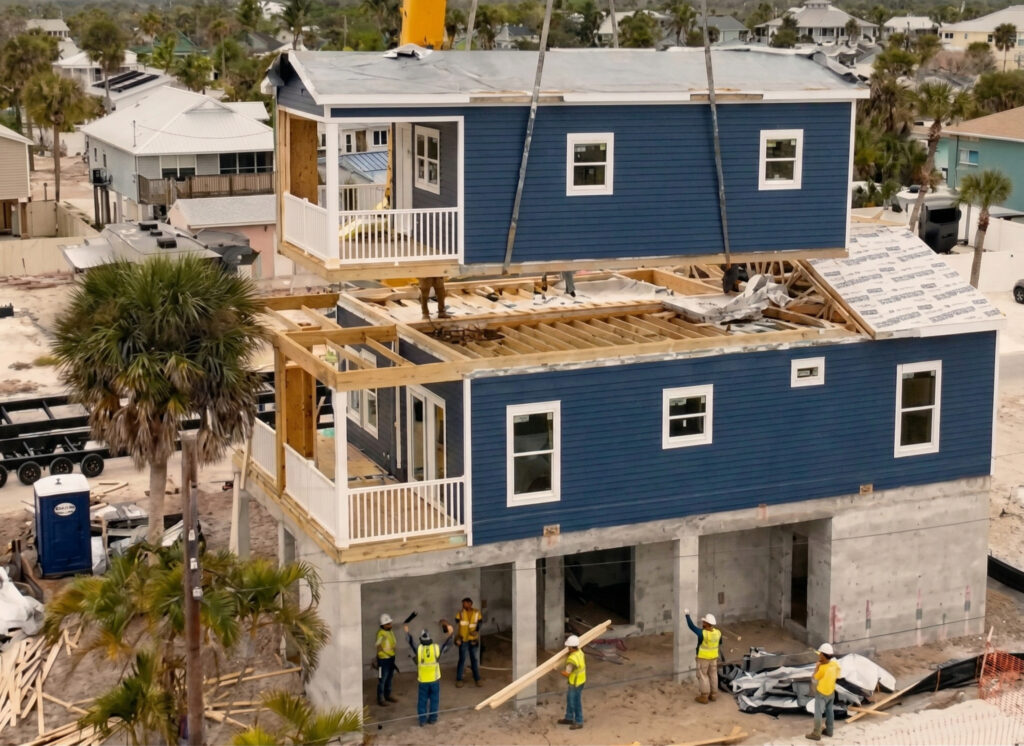
- The Time Value of Money: This is the critical factor for ROI. A traditional build might be complete in two years, if everything goes perfectly. A high-end volumetric modular project can be completed in just 5 to 7 months, from design approval to crane day.
Capitalizing on Timeline Compression
For real estate investors, timeline compression is the key to maximizing ROI. Cutting 12 to 18 months off a construction schedule doesn’t just mean moving in sooner; it fundamentally alters the financial model:
- Drastically Reduced Construction Loan Interest: You are holding a construction loan for half the time, saving tens of thousands of dollars in interest alone.
- Faster Occupancy/Rental Revenue: Whether you are building your own estate or a high-end vacation rental, your property is generating revenue up to a year sooner than traditional construction, dramatically boosting your IRR (Internal Rate of Return).
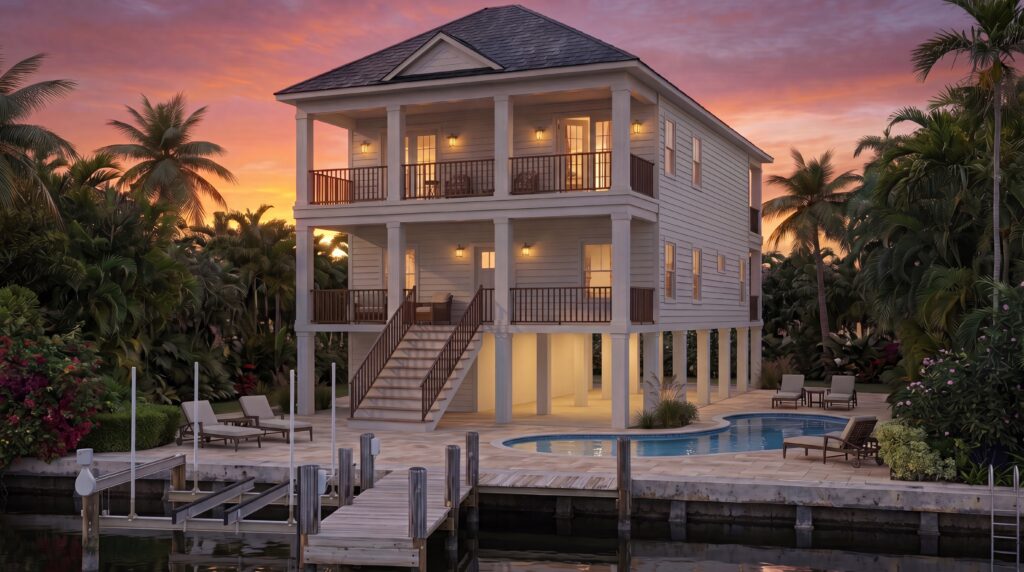
For families navigating post-storm rebuilding, this speed is priceless. Working with dedicated stilt home builders through the Rapid Rebuild Homes program allows homeowners to bypass the local trade backlog, getting a brand new elevated house delivered in record time.
The Strategic Choice for Florida Investors
The market data heading into September 2026 confirms that the traditional model of site-built luxury homes is increasingly high-risk due to labor volatility. Investing in premium modular construction is a strategic pivot to certainty. It provides unmatched speed-to-market, guarantees a precision-engineered product, and offers accelerated appreciation.
Whether you are looking to secure a resilient asset against coastal elements or generate high-performing revenue, the move to custom modular homes isn’t just about speed; it’s the smartest investment choice of 2026.