
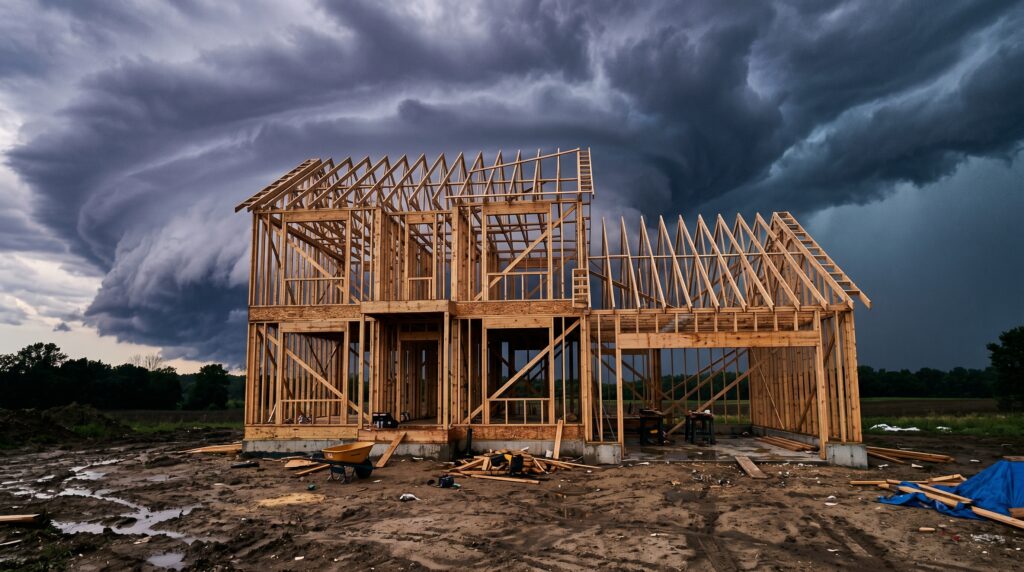
June marks the official start of the Atlantic hurricane season, bringing severe weather, high winds, and heavy summer downpours back to the forefront of everyone’s minds. For homeowners planning a custom build in areas like Tampa Bay, Florida, this season exposes one of the biggest vulnerabilities in the traditional construction industry: building outside.
Most buyers accept weather delays and exposed, wet lumber as a normal part of building a house. They shouldn’t.
Leaving raw materials exposed to summer humidity and storms doesn’t just delay your move-in date—it fundamentally compromises the structure and drains your budget. However, a massive shift is happening in how resilient homes are built. Every premier coastal home builder is abandoning the muddy, weather-dependent construction site for a smarter, faster approach.
Here is why precision off-site construction is becoming the new standard for coastal living.
The Hidden Cost of the Summer Rain
If you drive past a standard home construction site today, you will likely see a massive, overflowing dumpster in the front yard.
According to the U.S. Environmental Protection Agency (EPA), construction and demolition debris represents the single largest category of solid waste nationwide. In traditional site-built projects, nearly one-third of that debris ends up in landfills. Why? Because when you build outside, materials are subjected to the elements.
Lumber sits in the rain, absorbing moisture that leads to warped frames, mold risks, and drafty, imperfect seals. Sloppy on-site offcuts and weather damage mean that up to 15% of the raw materials a buyer purchases are thrown away.
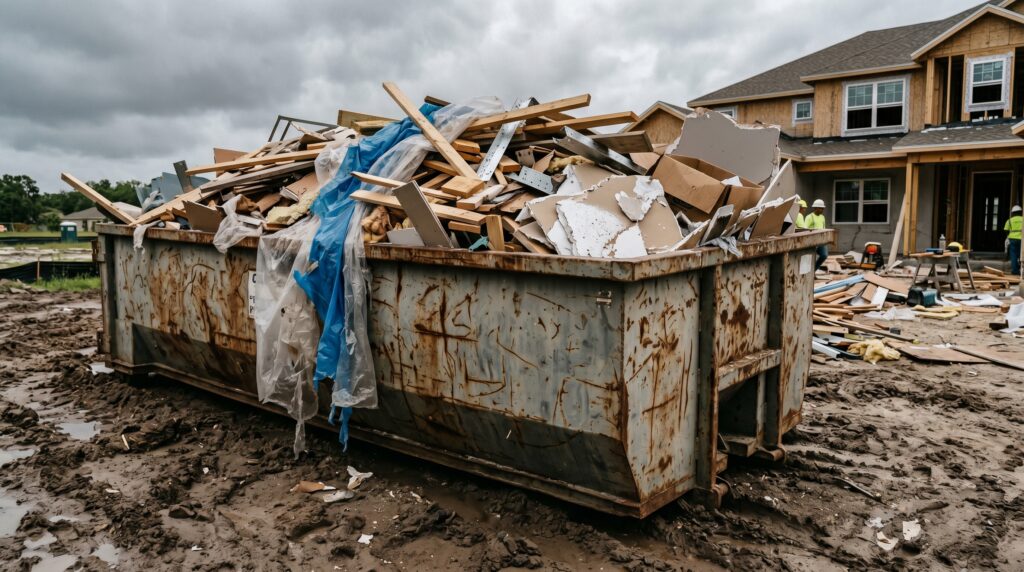
By moving the construction process indoors to state-of-the-art, climate-controlled facilities, a modern modular home company eliminates this waste entirely. Advanced software maps every cut of wood and steel before a blade ever drops. Data from the Modular Building Institute shows that shifting construction to a controlled factory environment can reduce site waste by up to 90%. Your budget goes directly into the quality of your home, not a landfill.
The FBC & Precision Engineering Advantage
The environment a home is built in dictates its strength. It is a common misconception that factory-built homes follow mobile home standards. In reality, a legally permitted modular home in Florida must strictly adhere to the Florida Building Code (FBC)—not the HUD code used for mobile trailers.
To create true hurricane proof homes, precision off-site builds are over-engineered by necessity. Before a modular home ever reaches your foundation, it must travel down an interstate at 65 miles per hour. Physically, driving a structure down a highway at those speeds subjects it to the exact same wind forces as a Category 1 hurricane.
To survive that journey without a single cracked drywall seam, these structures require significantly more reinforcement than traditional framing. A high-quality modular home builder uses extensive industrial adhesives, heavy-duty screws instead of standard nails, and specialized steel strapping to create a continuous load path from roof to foundation.
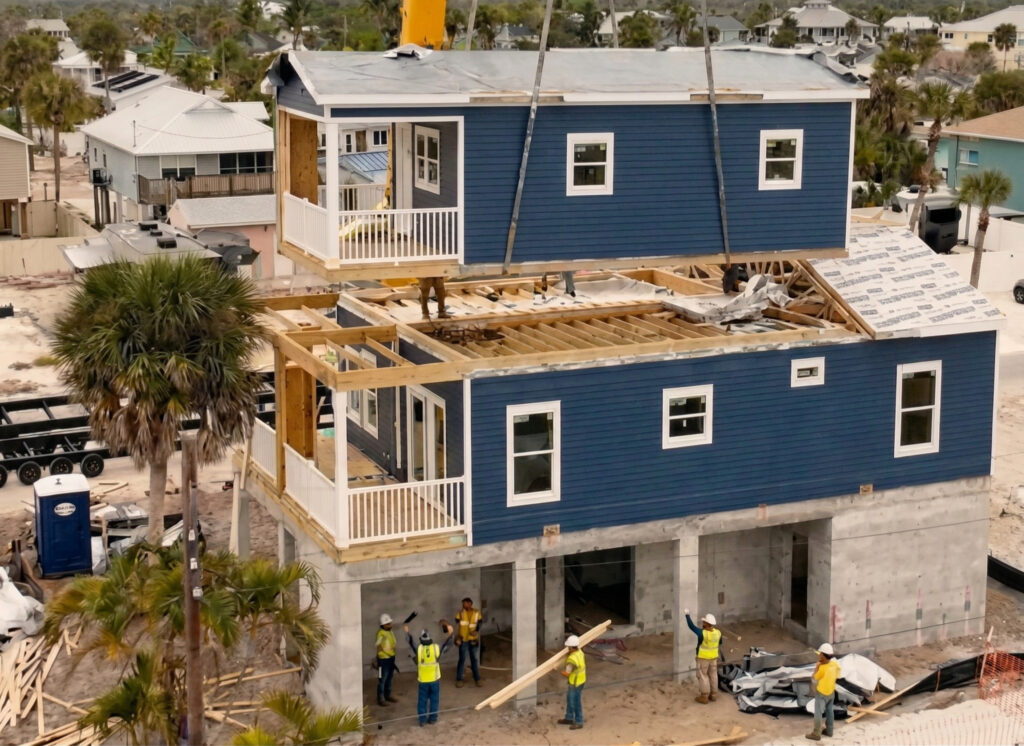
The ultimate test of this rigidity happens upon delivery. The structure must be lifted by a crane and gently lowered onto its permanent foundation. If a traditional site-built home were picked up by a crane, it would pull itself apart under its own weight.
For coastal residents building in High-Velocity Hurricane Zones (HVHZ)—such as Miami-Dade or specific high-risk coastal counties—the FBC dictates that homes must be structurally engineered to resist wind speeds exceeding 150 to 180+ mph. Furthermore, strict FBC and FEMA regulations require an elevated house in designated flood zones to clear the Base Flood Elevation (BFE). Working with an experienced stilt home builder who utilizes off-site construction guarantees that the home resting on those pilings is an immovable fortress. Following the devastation of Hurricane Andrew, a report by the Federal Emergency Management Agency (FEMA) concluded that precision off-site built homes “performed much better than conventional residential framing” against 130+ mph winds.
Shattering Traditional Timelines: From June to January
Building a home the traditional way is notoriously slow. A standard custom home can easily take 10 to 14 months to complete, often stretching much longer when severe summer storms or winter freezes halt exterior work.
Because the Rapid Rebuild homes program moves the process indoors, weather delays are entirely eliminated. While your permanent concrete foundation or pilings are being poured and prepped on-site, the core structure of your home is simultaneously being built in the factory. This dual-track process allows for true turnkey simplicity, consistently delivering a reliable 5-to-7-month timeline.
A project starting the planning phase this June can realistically have you turning the key and walking through the front door by early next year.
The Bottom Line
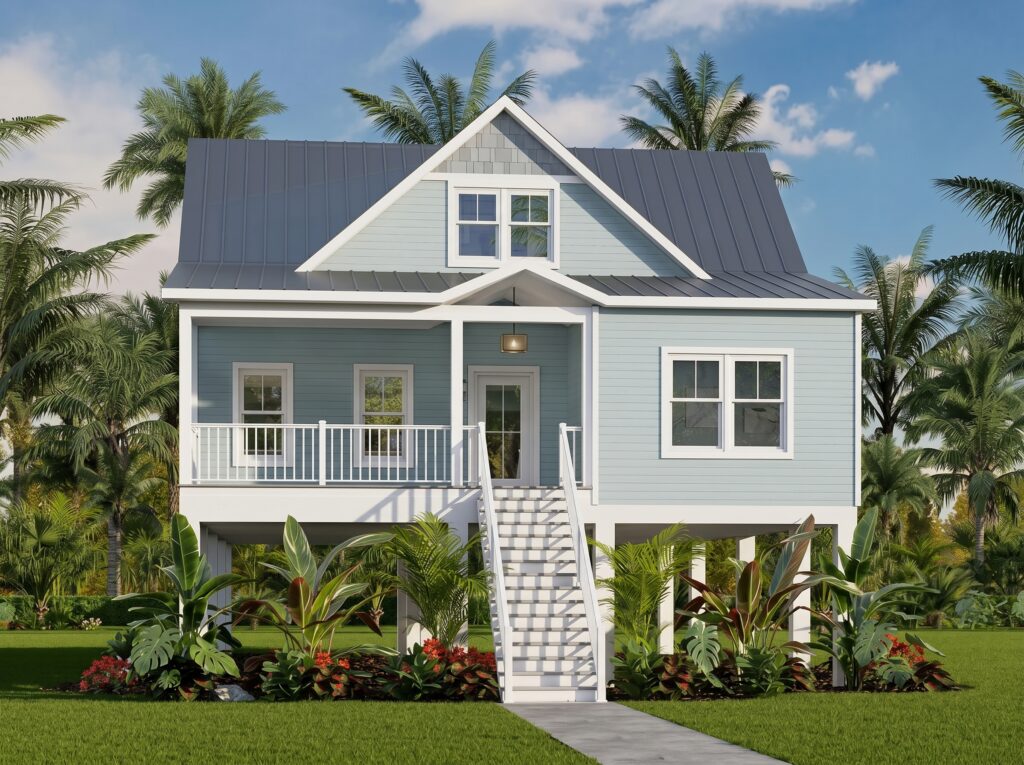
Building a custom home no longer requires accepting massive material waste or hoping the weather cooperates. Backed by strict FBC compliance, extreme-weather testing, and government data, the modular homes Florida residents are choosing today prove that a faster, more controlled process yields a significantly stronger home.
Ready to build a home that is engineered to withstand whatever nature throws at it? The best next step is getting professional guidance on your specific lot and layout options. As your dedicated modular home contractor, Rapid Rebuild Homes offers a complimentary, zero-pressure planning consultation to help you map out your timeline and budget with absolute clarity.
Frequently Asked Questions
Why are coastal home builders moving construction into a factory?
Because weather is the enemy of a good build. On an exposed coastal lot, rain, humidity, and wind stall the schedule and soak the lumber before the roof is on. In a climate-controlled factory, materials stay dry, the schedule never waits on the weather, and every home is built to the same repeatable standard.
Does an indoor-built home hold up better in a hurricane?
Yes. A factory-built coastal home is engineered to 180 mph design winds for the structure and 160 mph for windows and doors under Florida Building Code 2023. Because each module has to survive being trucked and craned into place, it carries reinforced connections and extra fastening that an exposed site build doesn’t require.
Isn’t a site-built home more custom than a factory home?
Not anymore. The design is fully custom — layout, finishes, elevation, and roofline are all yours. Only the assembly moves indoors. You get the same architectural freedom with tighter tolerances, because factory walls are straighter and seals are tighter than framing left exposed to Florida weather for months.
How does moving indoors affect the build timeline?
It roughly cuts it in half. The factory builds your home while the pile foundation is installed on your lot at the same time, so the two longest phases run in parallel. The result is six to eight months end-to-end, with three to four months of that being construction — versus 15 to 24 months for a comparable site-built coastal home.
Is a factory-built home the same as a mobile or manufactured home?
No. This is modular construction, built to the same Florida Building Code 2023 as any site-built house — not a manufactured (HUD-code) home. The factory build is verified against the engineered drawings by an independent inspection facility, and your local building department inspects the foundation and set on site.